Thanksgiving
by Rev. Gabriel Baltes, O.S.B. | 11/23/2025 | Weekly ReflectionDear Parishioners,
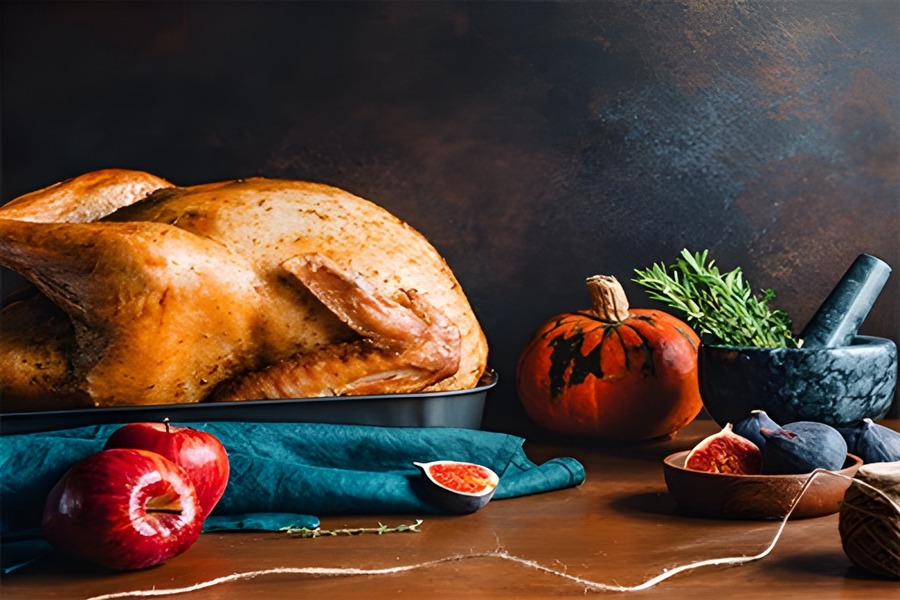
This week Americans will observe, as we traditionally do on the 4th Thursday of November, Thanksgiving Day. The history of this observance is complex and not unanimously agreed upon. Most historians associate its origins with a three day harvest feast that was shared by the Plymouth Colonists and the native Wampanoag people in 1621. It was intended to be a celebratory meal after the Pilgrim's first successful harvest. The menu included fowl, fish, and corn along with venison that was provided by the Wampanoag leader, Massasoit. For over 200 years Thanksgiving Day was celebrated irregularly throughout the colonies until President Abraham Lincoln declared it a national holiday in 1863.
One of the beautiful features of this day is that it is not aligned with any particular race or religious denomination, thus giving it a universal character in which all people may participate. But is this actually the case? The word "gratitude," frequently used in conjunction with Thanksgiving Day, is derived from the Latin word gratus, meaning "thankful" or pleasing." The word is not easily defined without using derivatives of it, such as, "gratify," "grateful," and "grace." Sometimes words like appreciation," or "pleasing" are used synonymously with "gratitude." Generally it refers to a feeling, sentiment or emotion for some experience of the past, like a bountiful harvest or an unexpected blessing that was received.
Presumably, when we gather in our churches or around our dining room tables overflowing with a conscious excess of food on Thanksgiving Day, we will recount (silently or aloud) the benefits and blessing that punctuated the year gone by, something I believe it is fitting and even necessary to do. But what about those for whom the past year was not one of blessing but one that was marked by hardship and pain, e.g., those who experienced the death of a loved one or who those who were diagnosed with a terminal illness? What about those who lost their employment due to government shutdowns, or whose homes were destroyed by natural disaster, or whose good name was forever ruined by scandal or vicious rumors? What about people who can no longer afford medical treatment or who have lost the educational opportunities that would create a better life for them and their families? What about people whose lives were ravaged by violence or war? What about those who have abandoned the will to live or have surrendered to hopelessness and despair?
Do these people have reason to be grateful this Thanksgiving Day? One might argue that indeed they do since things could always be worse. Such a response however seems patronizing, shallow and insensitive to the depth of their misfortune. I would maintain that the only way to justify an attitude of gratitude for human beings such as these is to radically redefine gratitude in three ways. The first is to understand gratitude, NOT primarily as a feeling or sentiment of the heart, but as a conscious choice of the will - the choice to live in a specific way. Secondly, gratitude must be dislodged from its association solely with the past and be recognized as possessing a future dimension as well.
This requires a commitment to creating that future where the brokenness and suffering that characterize so much of our world can be healed. And thirdly, it necessitates an ultimate reliance on God. Human effort alone will not suffice. It never has. Working to create a healthier and more just future means participating in the original plan that God intended for the world. It also means claiming our role as co-creators with God in the ongoing mystery of salvation. It is only with this future orientation that gratitude has the potential of being an experience (and not a feeling) that is available to all people no matter what lies in their past or what currently defines their present. It seems like this understanding of gratitude was a hallmark of that first Thanksgiving Day in 1621. May it be a hallmark of ours as well.
Blessings,
Fr. Gabriel O.S.B.
BACK TO LIST